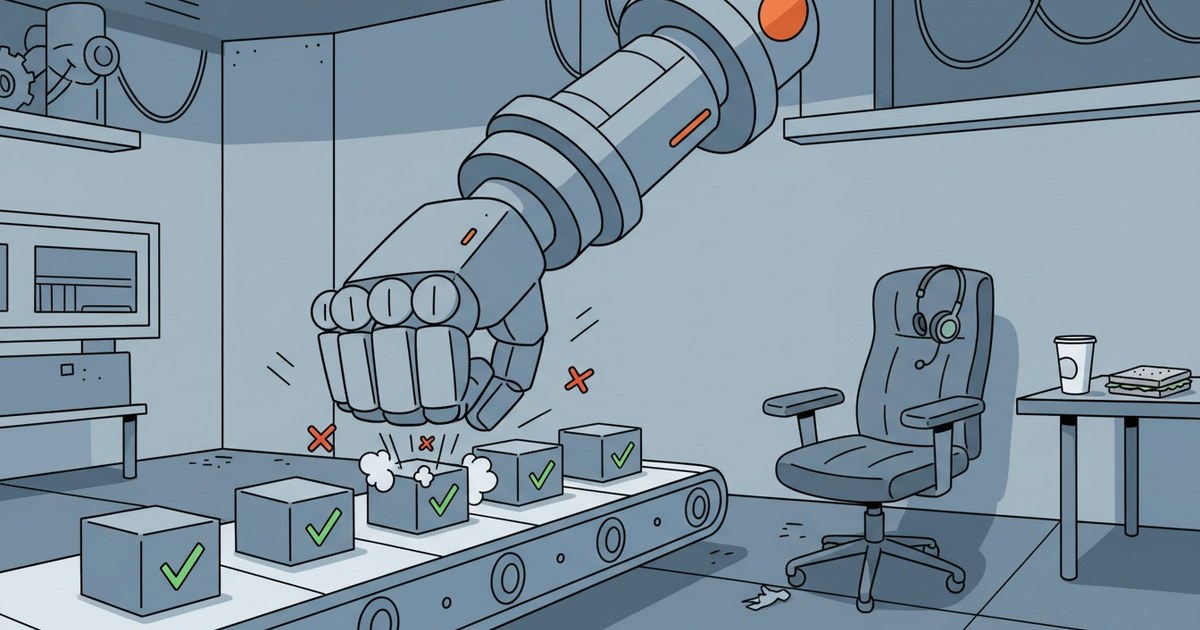
«AI Writes Code, but a Human Still Has to Run the Project» — No. The Entire SDLC Runs on Agents Now

Requirements, planning, infra, CI/CD, tests, monitoring — every step of the cycle, pinned to a specific tool and a production case. No human in the loop required.

I read this opinion ten times a week. Okay, the argument goes, AI can write code — fine. But to actually run a project, you need a human: talk to stakeholders, write a plan, set tasks for that same AI, configure infrastructure, Git, servers, monitoring. And surely no one is replacing the human there!

My eyes roll back every time. What?

Let me walk through the entire cycle. Step by step. At every step, I will show you not a fantasy, but a specific practice with a tool underneath it — because I have already run this cycle hands-on.

Continue reading “«AI Writes Code, but a Human Still Has to Run the Project» — No. The Entire SDLC Runs on Agents Now”

AI Is Not Just a Coder: How AI Covers the Entire Software Development Lifecycle

‘AI is just a very fast intern coder’ is an accurate description of stage one. At stage two, AI becomes an executor of thinking at every step of the SDLC — from clarify dialogs with stakeholders in Jira to multi-agent pipelines that catch, fix, and verify themselves.

"Writing code is only a small part of the SDLC. There's also stakeholder interviews, requirements formulation, architectural design, testing, monitoring. AI is just a very fast coder — not a thinking member of the team."

That argument is right. For stage one.

At stage one, someone watches AI write code and concludes: "AI = coder." Then they notice that coding isn't the whole of software development. "Therefore AI won't replace engineering entirely." The logic holds. The conclusion doesn't.

At stage two, AI covers exactly what that argument says is missing.

Continue reading “AI Is Not Just a Coder: How AI Covers the Entire Software Development Lifecycle”