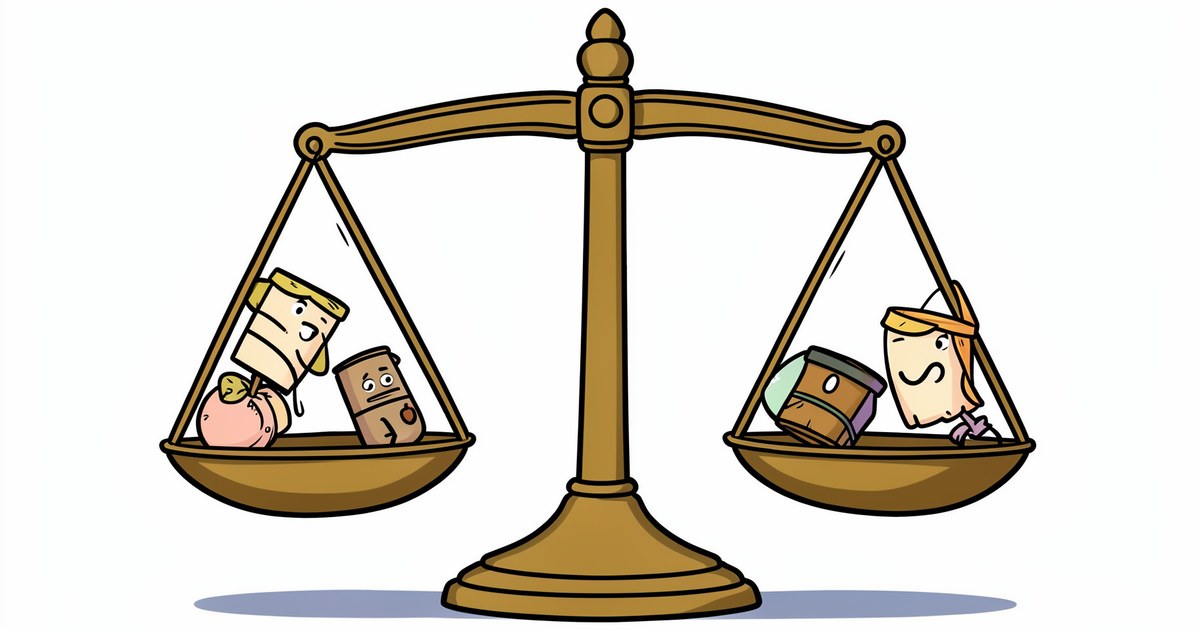
A provider quietly updated the base model. The API is formally the same, the version string is unchanged — but behavior shifted: Kovcheg started inventing loan terms not present in the documents slightly more often, and treating applications from one region slightly more strictly. No one changed anything in the code. A month later it surfaces as a spike in complaints and a question from compliance: "Why have approvals in region N dropped?" This is what silent degradation looks like — the most common way an AI system's quality erodes without a single deployment.
This chapter covers the quality plane: the guarantee that the model doesn't degrade over time, answers stay accurate through base-LLM updates, and decisions don't discriminate. For a credit-scoring system like Kovcheg, bias in scoring isn't a dashboard metric. It's a direct violation of the EU AI Act (Art. 10 — data quality, non-discrimination) and a legal claim.
The quality-plane engineer builds the evaluation infrastructure that makes these guarantees measurable and enforces them as a release gate.
The business goal
Kovcheg's decision quality and fairness must be measurable, continuously monitored, and wired into the release pipeline. Three promises to the business:
- A model update never ships to production without passing regression against benchmarks.
- Degradation and drift are caught by monitoring, not by complaints.
- Absence of demographic bias in scoring is provable.
What drives this
- Silent degradation: an under-the-hood model update tanks quality invisibly.
- EU AI Act (high-risk): Art. 10 (data quality, non-discrimination), Art. 15 (accuracy, robustness), Art. 14 (human oversight).
- Bias: systematically worse outcomes for a demographic group means a lawsuit, a fine, and reputational damage.
- OWASP LLM: LLM09 (Misinformation) — hallucinations as a class of failure.
The architectural pattern
Continuous Evaluation & LLM-as-a-Judge Pipeline. Evaluation is a continuous process: regression against golden datasets in CI/CD, online RAG metrics, drift monitoring, and fairness tests — all backed by an honestly calibrated judge.
Engineering stack
- Eval frameworks: Ragas (v0.2+ — no longer just RAG, agentic pipelines too), DeepEval, TruLens, MLflow (experiments and registry).
- Drift and data quality: Evidently AI, Great Expectations.
- Judge: LLM-as-a-judge, calibrated against human labeling.
Engineering implementation
Step 1. Golden datasets
Reference sets for regression-testing prompts and models in CI/CD. A model or prompt update can't ship without passing the run. The dataset includes "hard" cases and cases pulled from real incidents.
Step 2. Online RAG metrics
On a sample of production traffic: Faithfulness (grounding to context — a direct defense against the hallucinations from the opening scenario), Answer Relevance, Context Recall/Precision. This ties to the output guardrail from Chapter 3 — that's the real-time block; this is the trend.
Step 3. Drift monitoring
Anomalies in the distribution of incoming query embeddings (data drift) and in answer quality (concept drift). A shift triggers an alert. One subtlety: semantic caching (Chapter 5) masks drift — measure on the uncached sample.
Step 4. Fairness and bias
A regular run of synthetic tests: swap protected attributes (gender, age, region) while holding everything else equal, then compare decisions. A systematic difference is a bias signal. For Kovcheg, this is a mandatory gate for the credit module.
Step 5. Release eval gate
Metrics are part of the pipeline (policy-as-code, Chapter 6). Falling below a threshold blocks the deploy:
eval_gate:
  faithfulness:      {min: 0.92}
  answer_relevance:  {min: 0.85}
  fairness_delta:    {max: 0.03}   # max. difference in decisions on attribute swap
  block_release_on_fail: true
Where it breaks
- LLM-as-judge is itself biased and non-deterministic. Documented distortions: verbosity bias (longer = "better"), self-preference (favors its own style), position bias (answer order). Mitigation: randomize order, use clear rubrics, ensemble judges, human golden labeling. Without calibration, you're "evaluating the evaluator."
- Calibration drifts. Judge-human agreement that was solid six months ago goes stale — prompts, data, and model versions change. Recalibration is a recurring process, not a one-off.
- The golden dataset goes stale. It doesn't cover new cases, so metrics stay green during real degradation. Refresh the dataset from incidents and production traffic.
- Fairness is hard to measure. "Fairness" is context-dependent; several formal fairness metrics are mathematically incompatible at the same time — choosing a metric itself requires justification.
- Cost. Continuous judge evaluation is expensive; sampling versus completeness is a real tradeoff.
Standards and mapping
- EU AI Act: Art. 10 (data governance/quality, non-discrimination), Art. 15 (accuracy/robustness), Art. 14 (human oversight).
- ISO/IEC 42001: performance monitoring, continual improvement.
- NIST AI RMF: Measure (valid, reliable, fair, safe).
- OWASP LLM: LLM09 (Misinformation).
Lab and artifact
Build a golden dataset for Kovcheg (including incident-derived cases), configure Ragas metrics online, set up Evidently for embedding drift on the uncached sample, implement an attribute-swap fairness test for the credit module, wire an eval gate into CI, calibrate the judge against human labeling, and measure agreement.
Artifact: an eval suite + a quality/drift dashboard + a fairness report + a judge-calibration report (evidence for the RMS, Chapter 6).
Maturity checklist
- L1: manual quality checks on update.
- L2: a golden dataset + online RAG metrics, drift alerts.
- L3: an eval gate in CI, a calibrated judge with recalibration, regular fairness runs, drift measured on the uncached sample, tied into the RMS (Chapter 6).
Sources
- LLM-as-a-Judge calibration: power & limits (Deepchecks)
- RAGAS and LLM-as-Judge production evals
- Case-Aware LLM-as-a-Judge for Enterprise RAG (arXiv)
- Exploring LLM-as-a-Judge (Weights & Biases)
The provider will update the base model again next quarter — the version string won't change, and the behavior will shift. The question is whether your eval gate catches it before compliance does.