A CFO vibe-coded an alternative to your SaaS over a single weekend. Not an engineer, not a founder — a CFO. The first attempt was garbage. The third attempt sort of worked. By the fifth, he is never coming back to you.
Never.
The question you want to swat away but can't: if a product can now be built in seconds by anyone, what exactly are you planning to make money on?
AI Pulled a Fast One on SaaS
It used to be straightforward. Build a decent product, and people would buy it. Later, assemble a decent SaaS, and people would pay the subscription. The model held because the barrier to entry defended itself: building was expensive, slow, and required people who knew how.
Now — what SaaS, dude?
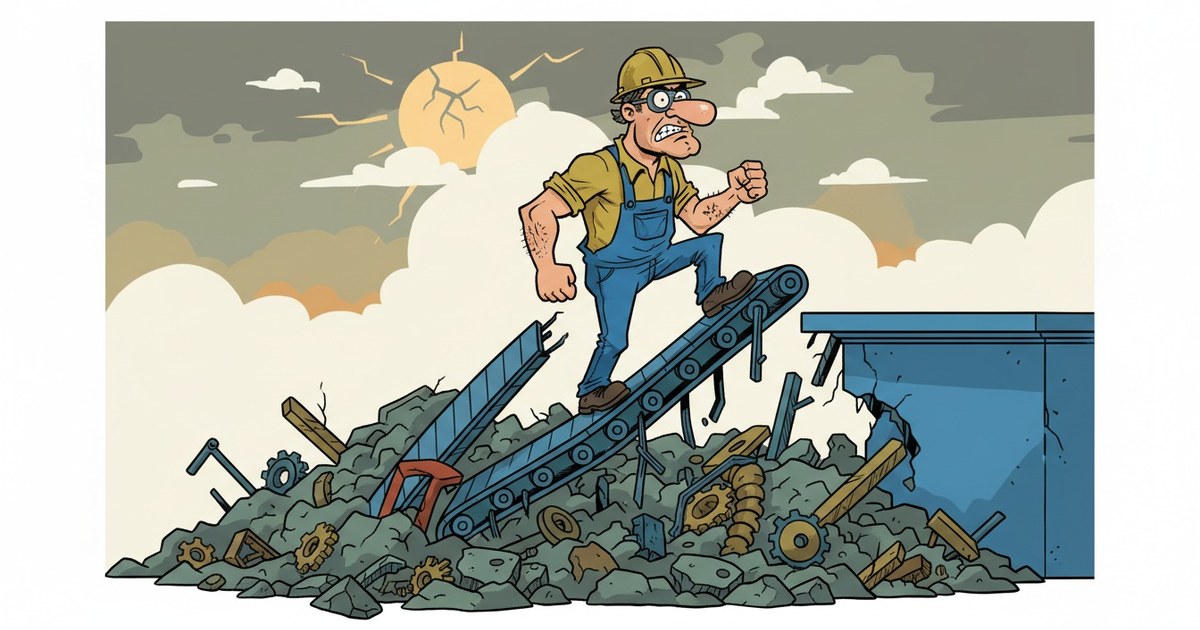
AI catastrophically raised the bar for what counts as a viable market entry while simultaneously demolishing the cost of producing one. Not just for you — for everyone at once. What was your competitive moat yesterday (the ability to assemble the thing) is a weekend project for a non-professional today. Sure, you can snicker at how badly they code. The trend isn't that the output is crooked. The trend is that it ultimately works.
And if it works, the moat is filled in. The cost of creation itself has gone to zero. If your revenue still sits on that layer, you are standing on sand that is already washing out.
Value Is No Longer Created — It Is Applied
To figure out where to go, you have to separate two kinds of work: creating something, and applying additional value to it.
I run two practice areas — AI in management and AI in marketing. For a long time I couldn't articulate what connects them. Here it is: neither is about creation. Both are about applying value from above.
In software development, a manager adds value to a product through effective management — the product turns out better, reaches the market faster, costs less to operate. The work of creation itself remains exactly the same. The difference is the quality of judgment and decisions.
In marketing, same in marketing. Value emerges from how precisely you define your target audience, construct your value proposition, differentiate from competitors, and understand customer pain. The work itself always looks identical — the only difference is whether you do it effectively or not.
The pattern is simple: In a world where creation has effectively zeroed out in value, you have to look one level up for the money — where value is not produced but applied. Where judgment and decisions settle everything, not assembly speed.
So You Learned to Build in a Second — What Next?
Here is the blind spot. I base this on my own research covering over a thousand companies, and nearly all of them share the same deafness.
Everyone rushed to learn how to build fast and cheap. Implement AI, put the whole team on vibe-coding, accelerate the creation conveyor. Fine. Let's say you succeeded. You ship a product in a second.
What next?
This is where the Luddites start cheering: "We told you nobody would buy your neuro-slop." They are exactly half right — nobody will buy the neuro-slop. The trap: nobody will buy their hand-crafted artisanal output either. Because the question is no longer whether you built it by hand or by machine. The question is: who is it for, why do they need it, and how do you differ from the CFO who assembled the same thing over a weekend?
Both neuro-slop and painstakingly hand-carved code hit the same wall. Creation speed decides nothing anymore, because everyone has learned to create. Everyone stuck on the creation layer is getting wrecked in the end — on both sides of the argument, those churning out volume by machine and those proudly cutting with a jigsaw.
This is the conclusion I reached digging into AI applied to the management layer, and that is why I went into Nextmoveengine and AI Delivery. Writing code with AI is hygiene now; it hasn't been an advantage for a long time. The payoff is where AI gets applied to the management layer — where the outcome, margin, and operational cost are decided. The cheaper agent labor becomes, the more expensive the person who designs and carries the entire contour.
Look One Step Further
This is not for future-of-work forums. It concerns you over the next few months, especially if you are job-hunting right now or planning to.
Stop looking at whether an employer has implemented AI. That is hygiene; everyone will have it. Ask this: do they have a vision extending beyond "implement AI and vibe-coding"? Do they understand that creation speed stopped being an advantage the moment it became available to everyone? Do they know where exactly they will apply value when creation fully depreciates?
Most of them have absolutely nothing of the sort.
Creation has zeroed out — the money moved up a level, to where judgment does the work. Those who understood this are already climbing. Those stuck on the creation layer will assemble their product in a second, and sit alone with it.